About Tofu

  • 2026年08月05日
#invention

Starting this year, days with temperatures of 40°C or higher have been officially designated as “extreme heat days”. These extreme heat days have been recorded nationwide for several days in a row, and here in Nagoya, we’ve also been experiencing a string of sweltering days.
In summer, when both the temperature and humidity remain high and my appetite inevitably wanes, I eat chilled tofu almost every day.
Tofu

It is believed that tofu was introduced from China, though there are various theories regarding the exact period—such as the Nara or Kamakura periods. For a long time afterward, people ate a slightly firmer type of cotton tofu made by boiling soybeans, mixing them with a coagulant, and squeezing out the moisture.
However, it wasn’t until the Genroku era of the Edo period that the tofu restaurant “Negishi Sasano-yuki” finally invented silken tofu—which is delicious served chilled. The restaurant is still in business in Tokyo today, more than 300 years later, and it’s a place I’d love to visit someday.

Silken tofu, with its smooth, slippery texture, is nutritious and delicious year-round—whether served cold or warm—making it an indispensable part of the dining table.
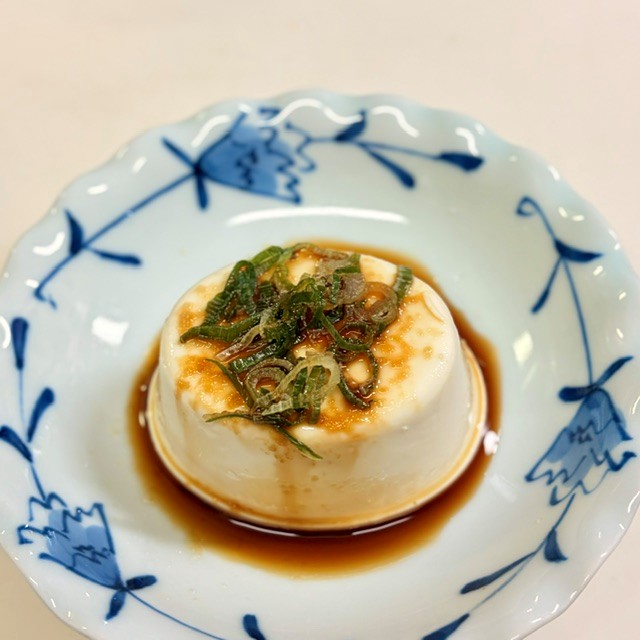
By the way, the chilled tofu we eat almost every day at home is made by simply popping a block of pre-packaged tofu onto a plate, grating some ginger over it, topping it with scallions, and drizzling it with dashi-infused soy sauce. Simple is best.
(Swimmer)

Tofu – Wikipedia
笹乃雪 | 創業三百三十三年 豆富料理 根ぎし (Negishi Sasanoyuki homepage: Japanese only)
What Holds Things Together

  • 2026年02月10日
#invention

It’s me Swimmer. Though the first day of spring has passed, the cold days continue, don’t they?
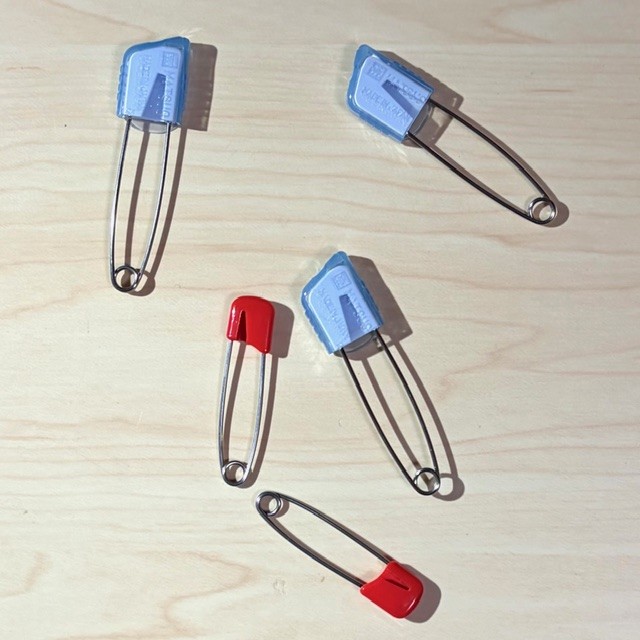
When winter comes, safety pins find use in various places around my home. Their purpose is warmth—securing fluffy towels to the quilt, and holding garments together.
Now, the history of this safety pin is quite ancient, apparently dating back to the Mycenaean civilization around the 14th century BC. By the 13th century BC, it seems to have taken on a form almost identical to the one we use today.
However, perhaps because its use was mainly for jewelry, it gradually faded into obscurity amidst the shifts of time and civilizations. Its revival came surprisingly late, in 1849, when it was reinvented by American inventor Walter Hunt.

safety pins

Since then, safety pins have undergone refinements and improvements, remaining a convenient household item to this day.
Today, this object that “connects and holds things together” seems to have taken on additional roles: its shape and function now also symbolize rebellion and signify solidarity.

Safety pin – Wikipedia

About the printing press

  • 2025年04月09日
#invention

I was watching TV without any particular reason when I came across a program that was looking at inventions from around the world.
The program ranked historical inventions, and the printing press came in first place.

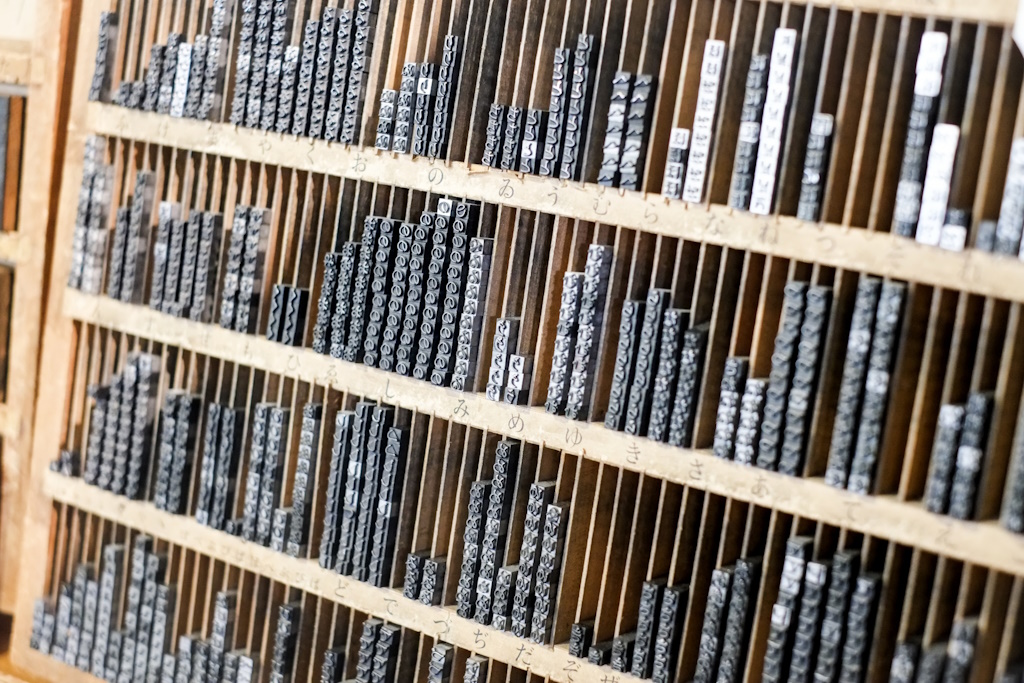
printing press

Until then, books and other means of communication could only be reproduced by hand, so only a handful of people could afford them. The invention of the printing press was a revelation, as it meant that information could be shared with the whole world at once. Of course, mass reproduction was impossible without access to cheap paper, but even so, the ease of printing compared to the days of hand-copying on expensive parchment was like night and day.
It is said that a printing press came to Japan once during the Warring States period, but it was forgotten after that and then reintroduced at the end of the Edo period. The speed of modernization that followed was nothing short of astonishing. Perhaps it was thanks to the mass-produced information.

Speaking of which, the manga “Orb” was made into an anime by NHK and broadcast until recently, and the printing press was an important point in the final episode. It seems that this manga will also be made into a play, so I’m thinking of going to see it. (Swimmer)

Japan Federation of Printing Industries (Japanese only)

Sweet Buns

  • 2024年07月11日
#invention #patent #trademark

 Hello. This is Raspberry, Kiku.
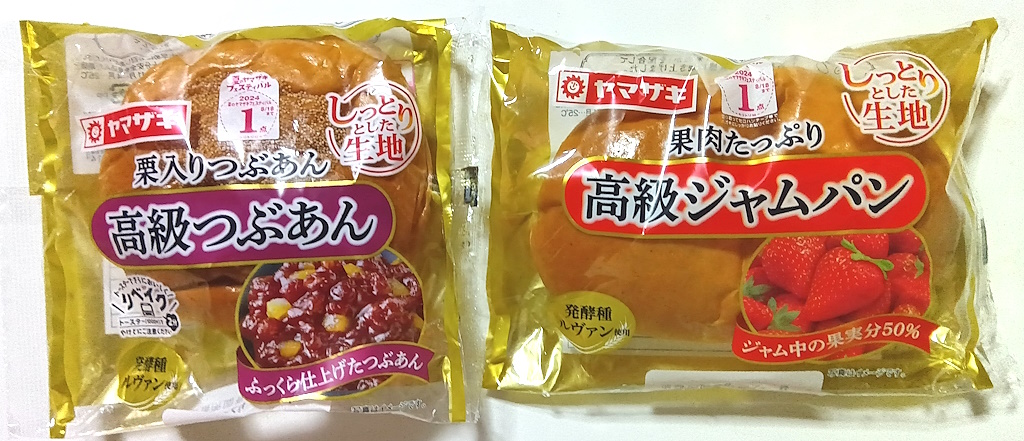
 This time, I would like to introduce you to high-grade sweet bean and high-grade jam sweet buns from Yamazaki Baking Co. There are several bread manufacturers, but I would like to focus on Yamazaki Baking Co.
 This is the first time I bought their high-grade sweet bean and high-grade jam sweet buns.

high-grade sweet bean and high-grade jam sweet buns from Yamazaki Baking Co.

 Yamazaki Baking produces not only sweet buns but also Japanese sweets and rice balls.
 The company’s sweet buns have a relatively long expiration date and can be stored for a long time, making them a valuable food in times of disaster.
 Yamazaki Baking Company has been applying for patents since 1972, and for trademark registration since 1954.
 The year 1954 was the year that the Ministry of International Trade and Industry (now the Ministry of Economy, Trade and Industry) decided on January 28, 1954 to designate April 18 of every year as “Invention Day” for the purpose of promoting and educating people about the patent system and other industrial property rights systems.
 I felt the history and future potential of intellectual property.

Yamazaki Baking Company (English) https://www.yamazakipan.co.jp/english/businesses/bread/index.html
Japan Patent Office Invention Day (English) https://www.jpo.go.jp/e/introduction/rekishi/hatsumei.html

Kids Design Award

  • 2023年11月01日
#design #invention #patent #trademark

The other day, while using the Internet, I came across the term “Kids Design Award”. Somehow I thought it might be related to design, so I read the article “Kids Design Award for ‘Eye Care Clip’ to Control Children’s Myopia“.

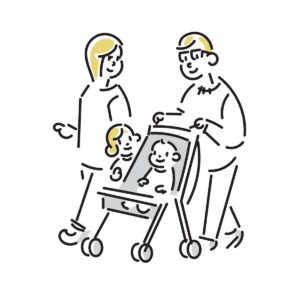
The Kids Design Award is an award system for products, services, spaces, activities, and research that fulfill the objectives of “living safely,”, “nurturing sensitivity and creativity,” and “creating a society where it is easy to have and raise children.”. With the aim of disseminating this information to society at large, it appears that in addition to designs for children, designs developed for adults and the general public are also eligible as long as they are child and child-rearing friendly.

Kids Design Award

The “Eye Care Clip” introduced in the article is a product developed by Clear Electronic Co., Ltd. in Tokyo I searched J-Plat Pat to see if the company had also owned patent and registered design, and found, as expected, 2 Japanese Patent applications, 4 Japanese Designs registrations, and 18 Japanese trademark applications.

Also, “Kids Design Award\KIDS DESIGN AWARD” was registered as a trademark. (Japanese Trademark registration No. 5010693, right holder: Non-profit organization Kids Design Association)

I was interested in the Kids Design Award because I felt that the award and intellectual property are a bit similar.
It would be nice to enrich our lives with useful inventions for children and families raising children. (Rabbit)

Kids Design Award (website) https://kidsdesignaward.jp/