Akita’s Odate “Magewappa”: Delicious Even When Rice Gets Cold—The Charm of Traditional Craftsmanship and the Registered Trademark for the Birch-Binding Pattern

  • 2026年10月14日
#intellectual property #Regional Collective Trademark #trademark

I bring a packed lunch to work. When it came time to replace my worn-out plastic lunchbox, I decided—after careful consideration—to purchase the “magewappa” I’d long admired during a trip to Akita a few years ago, and I still use it to this day.

Akita’s Odate “Magewappa”

A “magewappa” is a traditional Japanese wooden container (bentwood craft) made by softening thin strips of cedar or cypress with hot water and bending them into a curved shape. Major production areas include the Kiso region of Nagano Prefecture, Hinoemata Village in Fukushima Prefecture, and Fukuoka City in Fukuoka Prefecture; depending on the region, it is sometimes called a “menpa.”

The one I use is the “Odate Magewappa” from Shibata Yoshinobu Shoten in Odate City, Akita Prefecture—an unvarnished “natural wood finish” version. While some are lacquered or coated with urethane, making them easy to handle with oily foods or detergents, I find that the unvarnished version keeps rice from becoming sticky thanks to the wappa’s natural humidity-regulating properties, and the rice tastes delicious even when it cools down. Cedar is known for its natural antibacterial properties and light weight, and this design allows you to fully appreciate the beautiful straight-grained pattern.
This “Odate Magewappa” is registered as a regional collective trademark and is protected as a regional brand.
https://www.jpo.go.jp/e/system/trademark/gaiyo/chidan/document/tiikibrand/chiiki2014.pdf (Page 20)

The overall design of the Magewappa is exceptionally beautiful. While it is traditionally used as a bento box, new applications—such as goldfish bowls and champagne coolers—have also emerged. Additionally, the “kaba-toji” (birch bark stitching) technique—a traditional method of securing the joints of the bent wood with mountain cherry bark—features a variety of patterns.
Among these, the three types—“Komochi-zumi,” “Uroko-zumi,” and “Ryō-uroko-zumi”—were devised by Yoshinobu Shibata, who studied ancient bentwood crafts, and have been passed down to the present day as kaba-toji patterns; they were registered as trademarks in 2023.
https://magewappa.com/pages/about-kabatoji

In modern times, “kaba-toji” has taken on a stronger decorative significance than its original purpose of securing the wood, and it is also appealing as a design element that shapes the character of the bentwood lunchbox. Admiring the beautiful patterns of “kaba-toji” created by the artisans’ handiwork is one of the joys of using a bentwood lunchbox. The fact that this beauty is protected as a trademark serves as a reminder of the importance of intellectual property in traditional crafts. (Syszo)
Shibata Yoshinobu Shoten | Wappa Building (Japanese only)
An Encounter on a Trip

  • 2026年04月15日
#Regional Collective Trademark #trademark

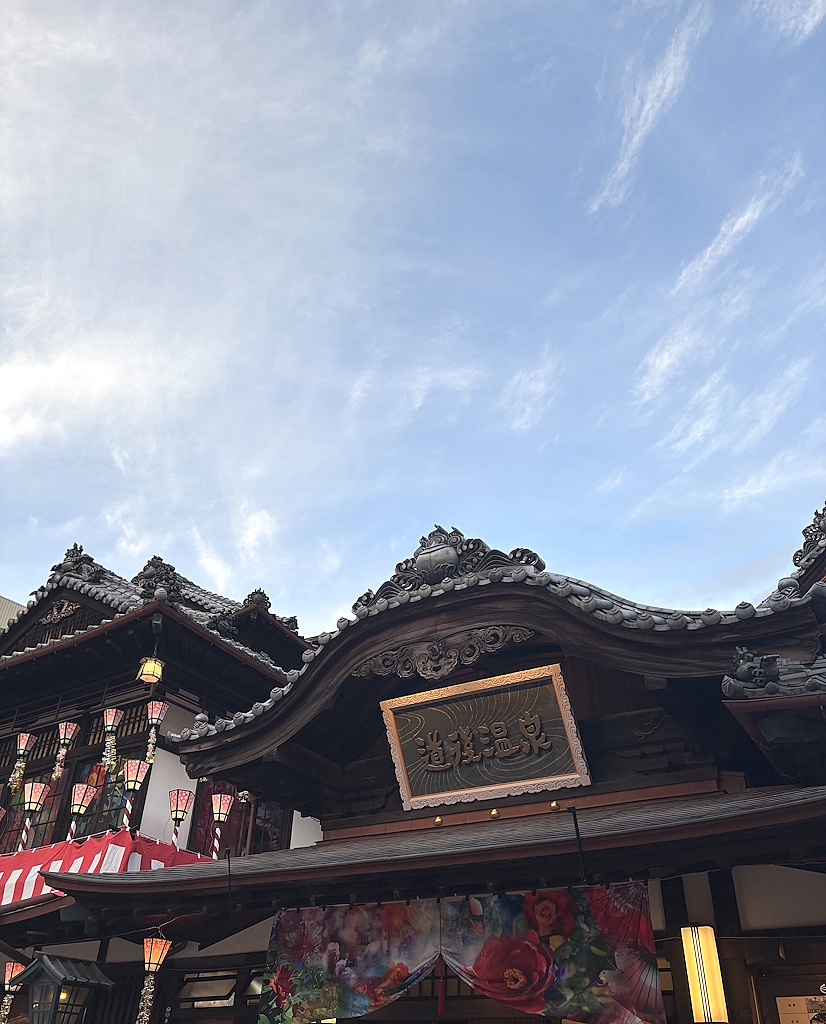
The other day, my family and I went on a trip to Shikoku.Br /> Of the four prefectures—Tokushima, Kagawa, Ehime, and Kochi—Dogo Onsen in Ehime Prefecture was our main destination.
For dinner, we went to a restaurant serving Setouchi cuisine and tried some local specialties. Among them, the one I particularly liked was “Uwajima Jakoten.”
The Jakoten, served lightly grilled, had a rich flavor that went perfectly with our drinks.
*“Uwajima Jakoten” (Japanese Trademark Registration No. 5083713) and “Dogo Onsen” (Japanese Trademark Registration No. 5071495 and 5435121) are registered as regional collective trademarks.

Dogo Onsen

I’m looking forward to seeing what trademarks I’ll encounter on my next trip! ♪ (Rabbit)

Hida Sarubobo

  • 2025年03月26日
#Regional Collective Trademark #trademark

Last month, I went to Takayama City in Gifu Prefecture with some friends.
We took the JR Hida train from Nagoya and arrived after about 2 hours and 20 minutes.

We enjoyed taking photos, eating our way around the city, and sightseeing.
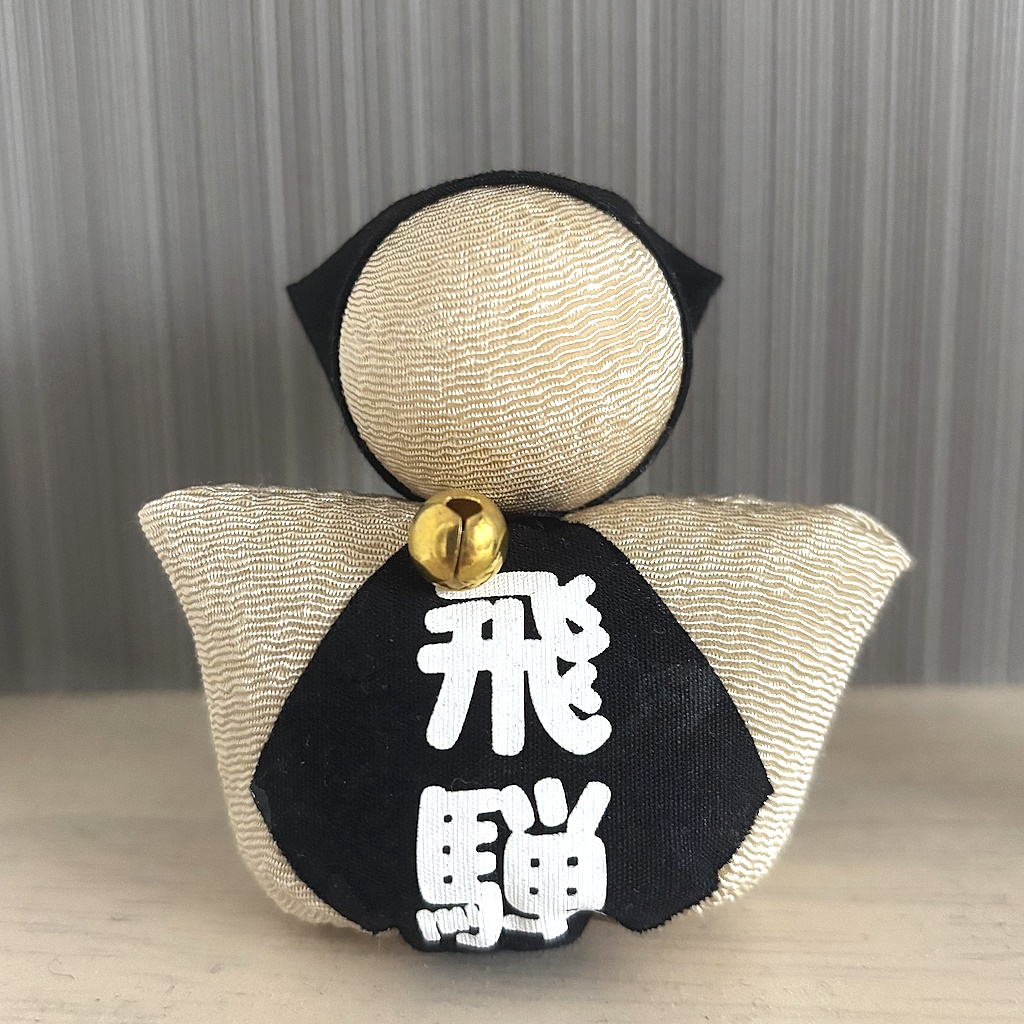
One thing I saw a lot in Takayama was the “Hida Sarubobo”. These dolls, which are called “Sarubobo” because they look like baby monkeys, are popular as good luck charms. The “Hida Sarubobo” is also registered as a regional collective trademark (Japanese Trademark Registration no. 5087585).

Hida Sarubobo

As a memory of this visit, we made Sarubobo beanbags. It took about 30 minutes to make them, and was a simple activity that could be enjoyed by both adults and children, involving sewing the cloth and attaching the Sarubobo head with glue.

Our firm has experience supporting intellectual property in the Tokai region, including Aichi, Gifu and Mie prefectures. We can also handle clients from outside the Tokai region, so please feel free to contact us. (Rabbit)

Speaking of Toyohashi’s Specialty…

  • 2024年07月24日
#Regional Collective Trademark #trademark

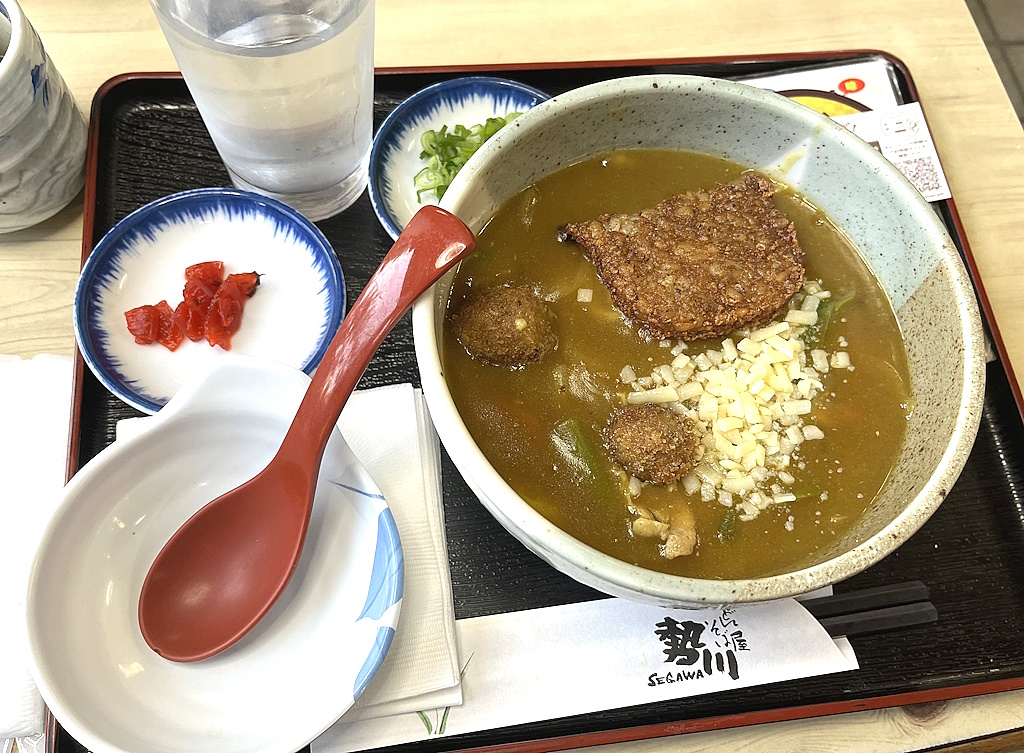
In early June, I had a chance to visit Toyohashi City, Aichi Prefecture and in the evening after finishing my business, I wanted to eat something gourmet from Toyohashi! I decided to try “Toyohashi Curry Udon” for the first time.
According to the “Five Articles of Toyohashi Curry Udon (Japanese Only),” the main features of this dish are that it contains rice, grated yam, and curry udon noodles in that order from the bottom of the bowl, and that it uses a quail egg produced in Toyohashi.
Different stores seem to offer a variety of “Toyohashi Curry Udon” and the one we had was topped with a deep-fried quail egg, hash browns, and cheese.
The inclusion of rice allowed us to eat the curry roux without leaving any of it behind, so we were quite full. It was very tasty.
“Toyohashi Curry Udon” is a regional collective trademark (Japanese Trademark Registration No. 5990959) of the Toyohashi Chamber of Commerce and Industry.

Toyohashi Curry Udon

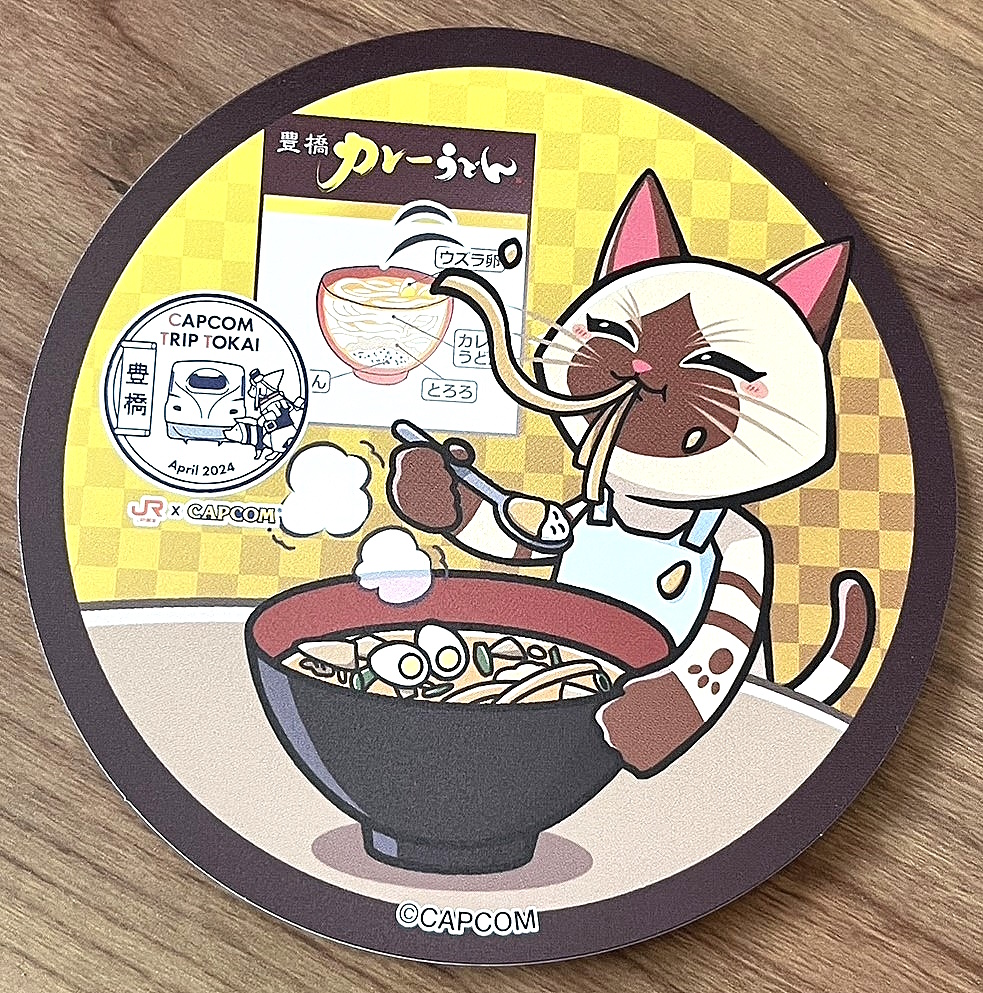
An illustration card of a Capcom character eating Toyohashi Curry Udon was on the tray. The card reads “CAPCOM TRIP TOKAI” and appears to be part of a collaboration project between JR Tokai and Capcom.

CAPCOM TRIP TOKAI

After-dinner desserts are also available♪
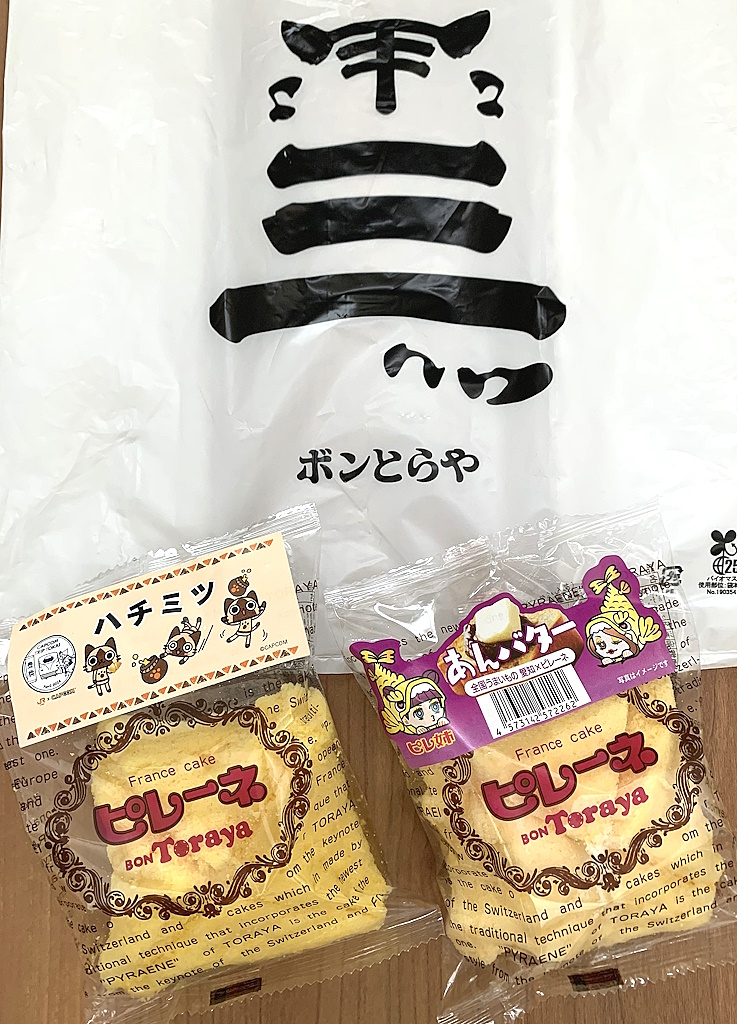
Speaking of Toyohashi sweets, “Pirene” is one of them.
We bought some at the Bon Toraya main store and headed home with great satisfaction.
“Pirene” is a registered trademark (Japanese Trademark Registration No. 6137384) of Bon Toraya Co.

Bon Toraya Pirene

Hunny Pirene also had Capcom characters on it.
I checked “CAPCOM TRIP TOKAI” and found that a collaboration project titled “Let’s go hunting in Toyohashi” is being held until July 31, and it looks like you can enjoy exploring the city of Toyohashi with the digital stamp rally “TOYOHASHI QUEST”.
CAPCOM TRIP TOKAI Toyohashi, Let’s go hunting! (Japanese Only)

After returning home, I had a Pirene.
The bean paste butter Pirene was also delicious.
The fluffy texture was great♪ (Cacao)

Kaga-bocha (Kaga is a city in Ishikawa prefecture, bocha means twig tea)

  • 2022年11月02日
#Regional Collective Trademark

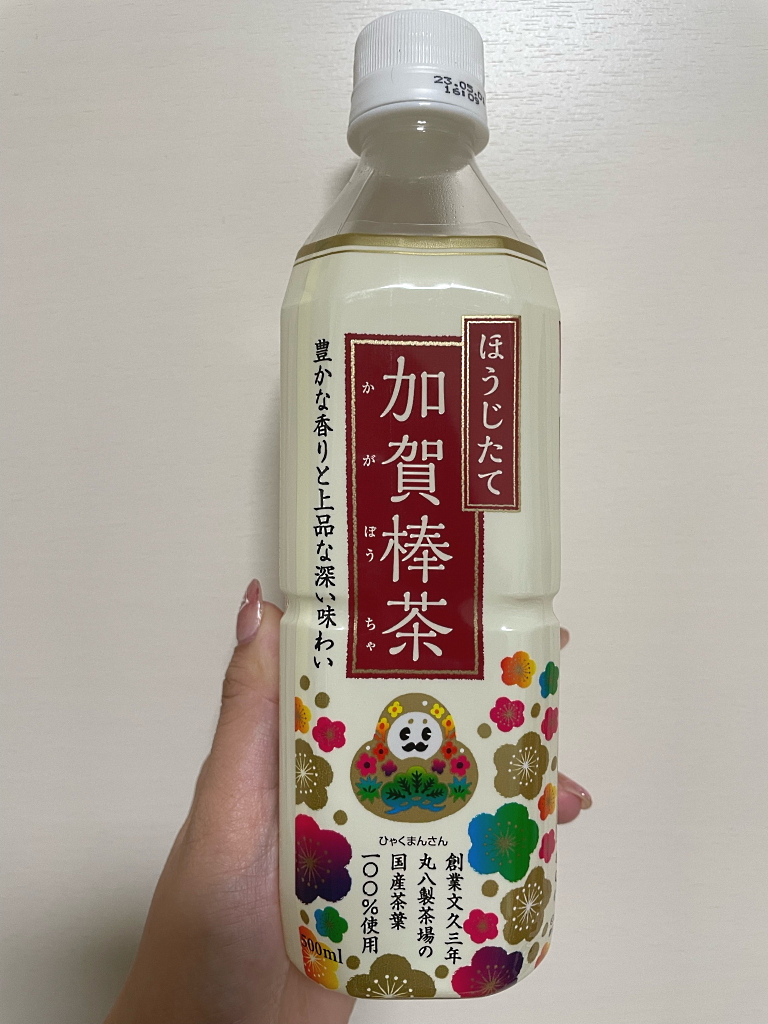
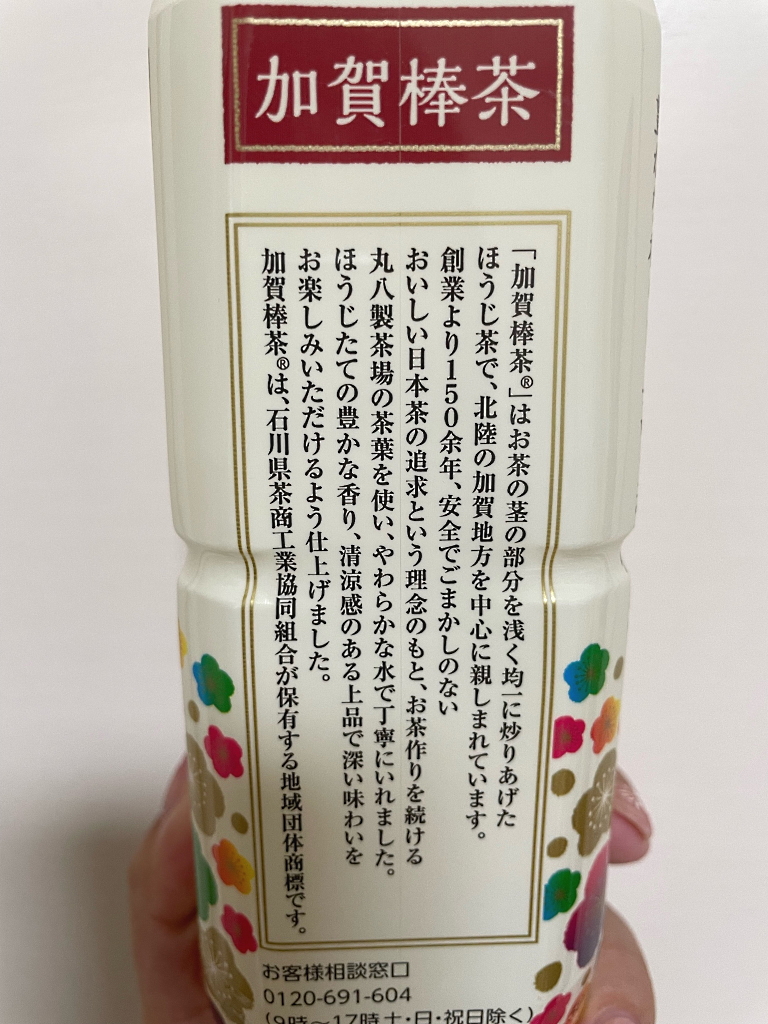
I went to Kanazawa in Ishikawa Prefecture over the weekend. I went to “Higashi Chaya District” famous for its traditional streets, and “Ohmicho Market,” where you can enjoy seafood. During the trip, I bought a bottle of Kaga-bocha, a type of hojicha (roasted green tea), which was very fragrant and had a deep and delicious flavor. The package of the bottle is also gorgeous and cute, and I liked it.

Kaga-bocha Kaga-bocha_regional collective trademark

On the side of the package, there is an explanation about Kaga-bocha, the last sentence reads, “Kaga-bocha is a regional collective trademark owned by the Ishikawa Prefecture Tea Merchant Industry Cooperative Association”.
A search on J Plat-Pat revealed that the trademark was registered as Japanese Trademark No. 6219164. (Rabbit)

Ishikawa Prefecture Tea Merchant Industry Cooperative Association’s Regional Collective Trademark page (Japanese only)
Kaga-bocha information on Japan Patent Office homepage (Japanese only)