Van Gogh Exhibition

  • February 18, 2026
#copyright #trademark

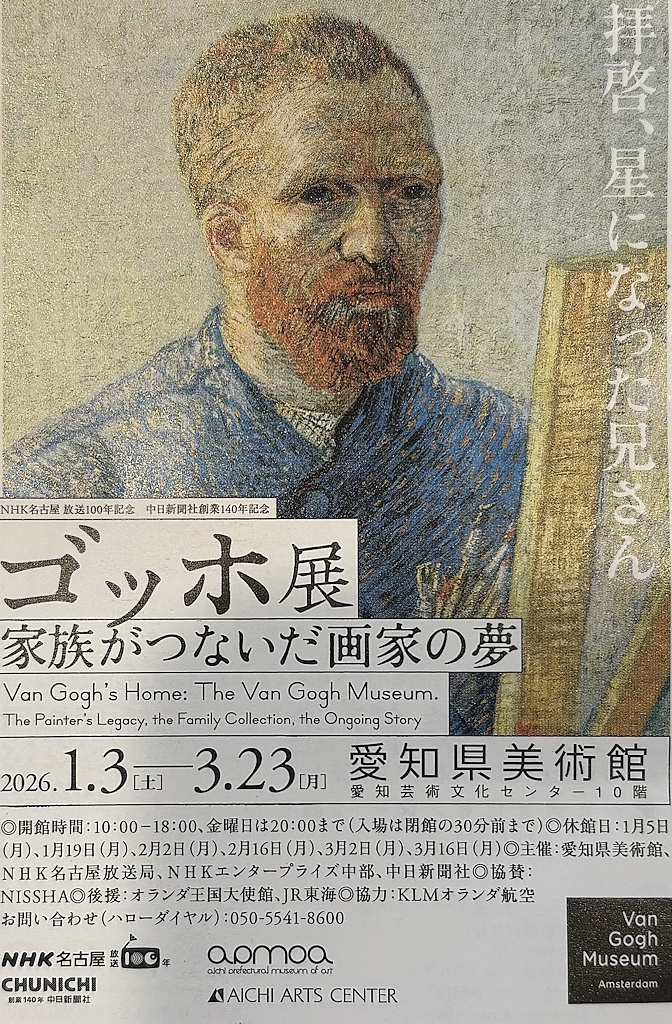
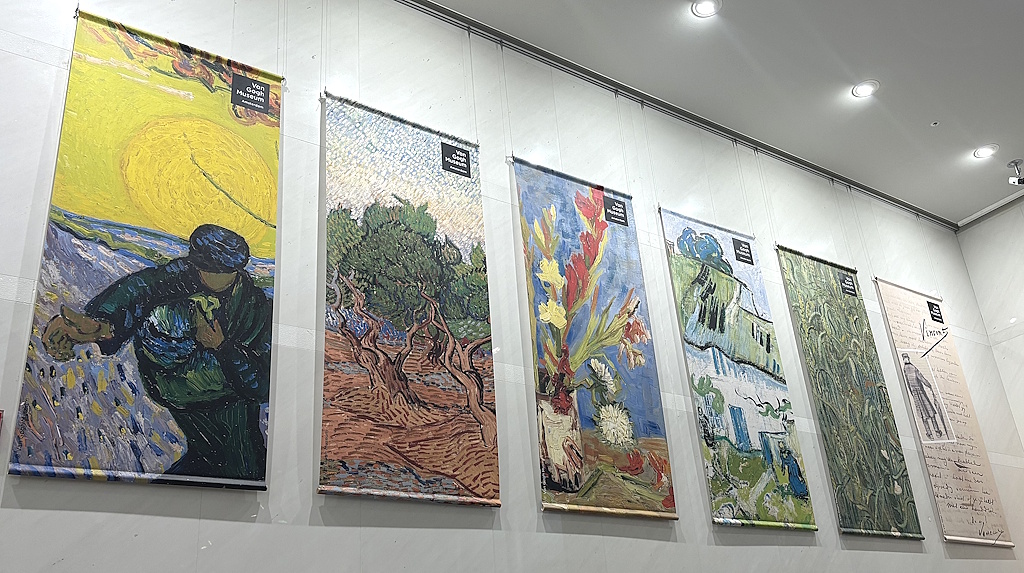
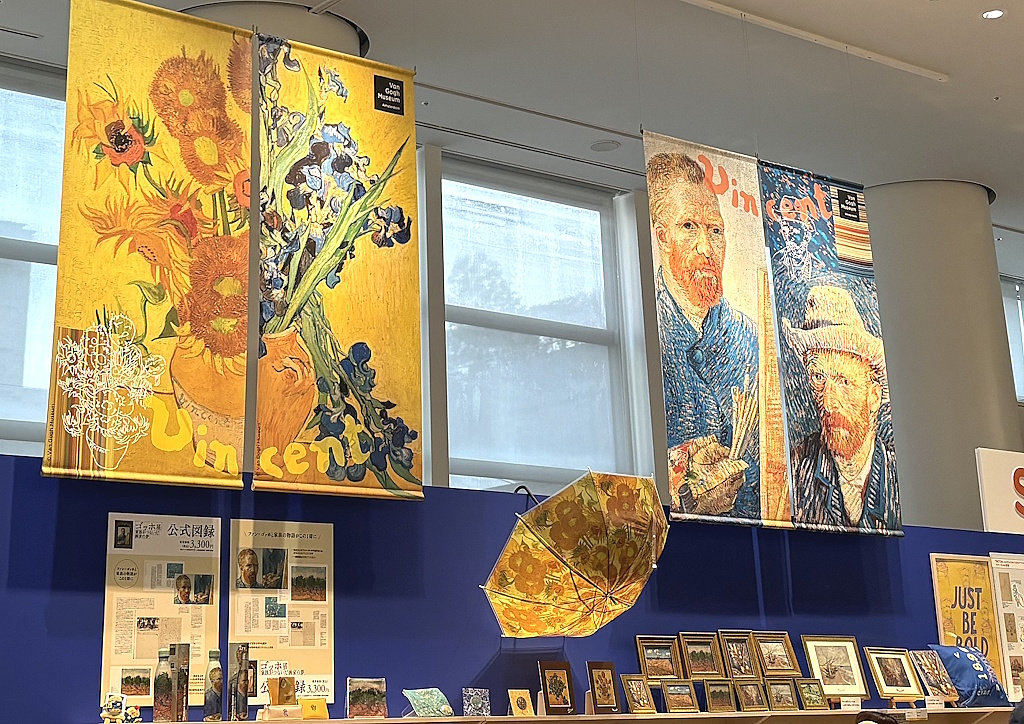
The other day, I visited the “Van Gogh Exhibition: The Painter’s Dream Passed Down by His Family” currently on display at the Aichi Prefectural Museum of Art.

Van Gogh Exhibition

I love Impressionist paintings and frequently visit exhibitions featuring artists like Monet and Renoir. Lately, though, I feel like there are more immersive exhibitions incorporating digital art.
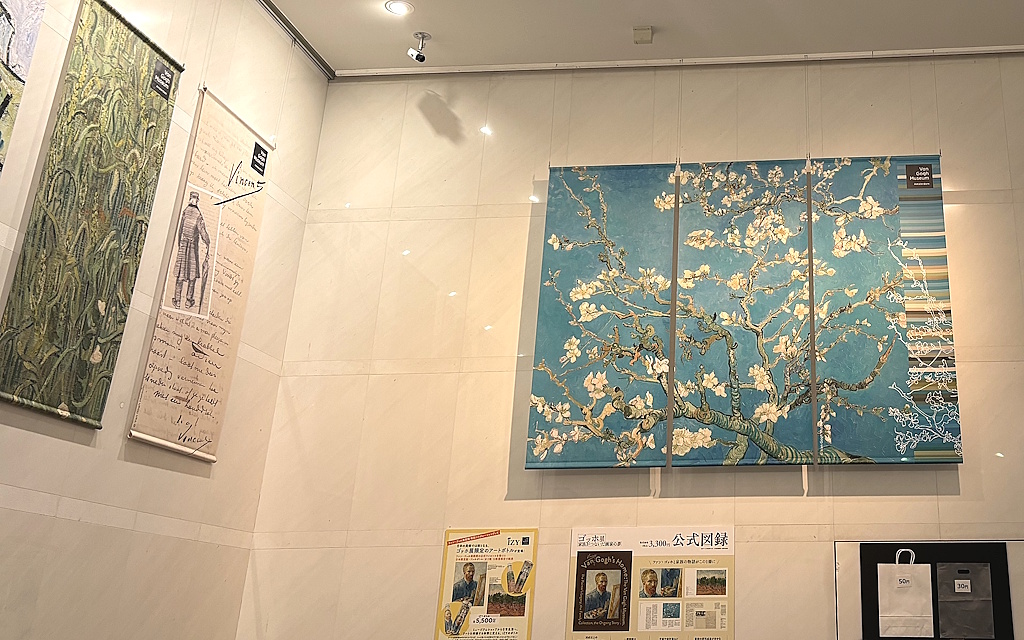
Since 70 years have passed since the deaths of Van Gogh, Monet, and Renoir, their copyrights have expired, placing their works in the public domain. Within the bounds of preserving the integrity of these works, they are reproduced as videos and 3D displays, offering a strange and wonderful experience where you feel as if you’ve stepped into the world of the paintings themselves.

Van Gogh Exhibition

Van Gogh Exhibition

This Van Gogh exhibition features not only paintings but also letters, narrating the relationships between Van Gogh and his family and how “Van Gogh” became a world-renowned painter. Understanding this story while viewing his famous paintings projected on large screens lets you feel the narrative of the art, almost like watching a movie.
About ten years ago, exhibitions typically featured paintings and their descriptions displayed in rooms categorized by era or artist. Technological advances have evolved the experience, bringing the world of art closer to us.

Van Gogh Exhibition

Incidentally, even if someone applied to trademark the name “Van Gogh,” it seems unlikely to be registered due to violating public order and morals (such as unauthorized use of a deceased person’s famous name causing detriment). (Chamomile)

Van Gogh Exhibition: The Painter’s Dream Passed Down by His Family | Exhibitions | Aichi Prefectural Museum of Art (Japanese only)

What Holds Things Together

  • February 10, 2026
#invention

It’s me Swimmer. Though the first day of spring has passed, the cold days continue, don’t they?
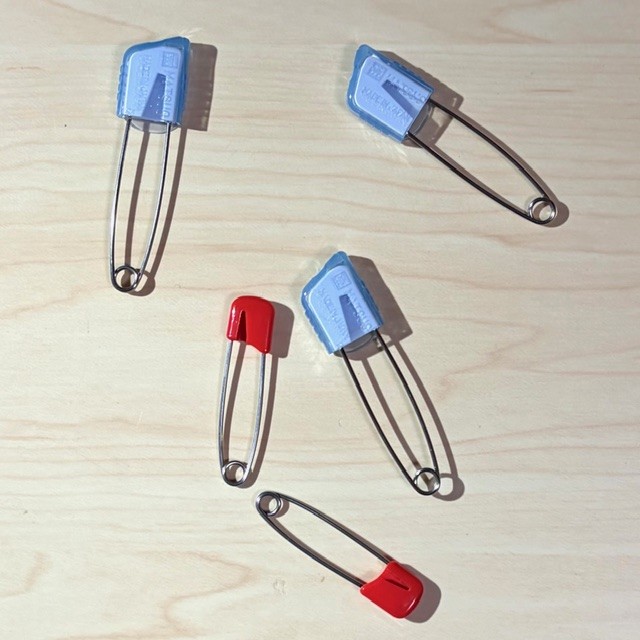
When winter comes, safety pins find use in various places around my home. Their purpose is warmth—securing fluffy towels to the quilt, and holding garments together.
Now, the history of this safety pin is quite ancient, apparently dating back to the Mycenaean civilization around the 14th century BC. By the 13th century BC, it seems to have taken on a form almost identical to the one we use today.
However, perhaps because its use was mainly for jewelry, it gradually faded into obscurity amidst the shifts of time and civilizations. Its revival came surprisingly late, in 1849, when it was reinvented by American inventor Walter Hunt.

safety pins

Since then, safety pins have undergone refinements and improvements, remaining a convenient household item to this day.
Today, this object that “connects and holds things together” seems to have taken on additional roles: its shape and function now also symbolize rebellion and signify solidarity.

Safety pin – Wikipedia

Fab 4

  • February 4, 2026
#copyright

Today, February 4th (Feb. 4), is celebrated as the anniversary of a certain great artist, inspired by their nickname, the “Fabulous Four.”

That artist is “The Beatles.”

Debuting over 60 years ago, they produced numerous songs—their so-called works—until their de facto breakup in 1970. All self-composed songs released during their active period were written and composed by the members themselves, with the most frequent credit being “Lennon-McCartney,” the joint name of John Lennon and Paul McCartney.

Lennon-McCartney works continue to captivate and influence people worldwide. However, the copyrights to these works would lead to prolonged financial disputes between the parties involved.

This is attributed to the fact that when they first established the music publishing company “Northern Songs” to manage the copyrights of Lennon-McCartney works, John and Paul entered into a contract with the company without fully understanding copyright law.

For those interested, the following book details this extensively, so please check it out. (p)
Northern Songs: Who Bit the Beatles’ Apple? | Shinco Music Entertainment | Publisher of Sheet Music [Scores], Music Books, and Magazines (Japanese only)

Reference Links
The Beatles – Wikipedia
Lennon–McCartney – Wikipedia

Finally, here’s a little something for everyone: an irregular time signature.

Geographical Indications (GI Mark) Protecting Regional Intellectual Property

  • January 28, 2026
#Geographical Indication #GI Mark

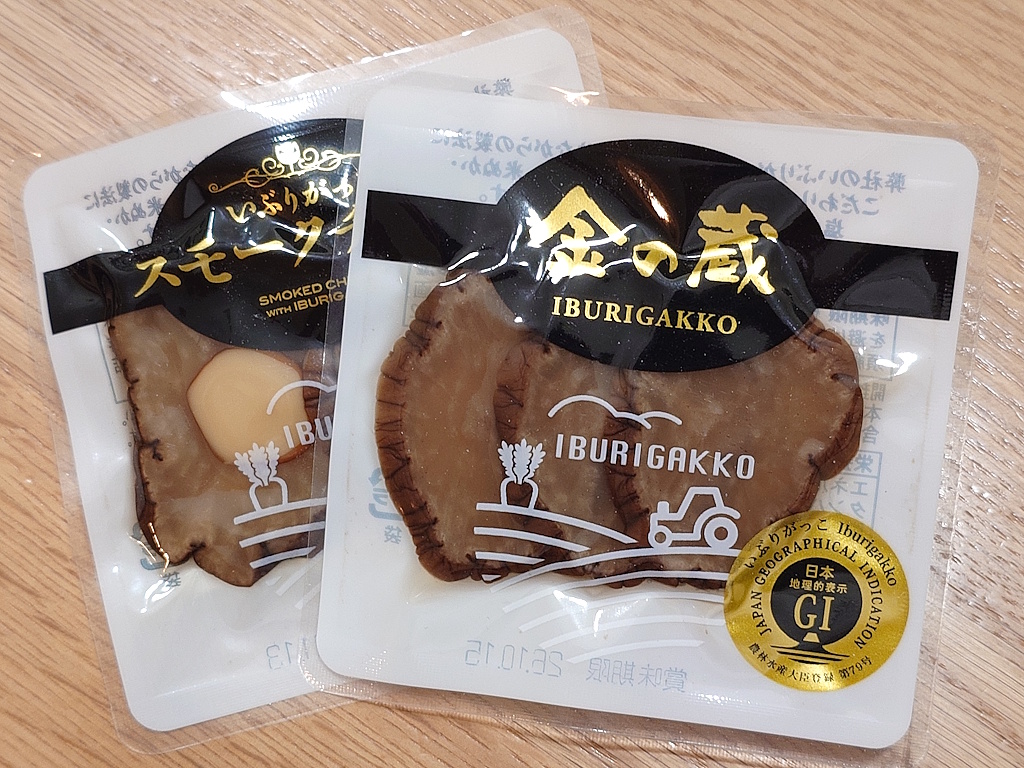
Upon closer inspection of the individually wrapped “Iburi Gakko” pickles I received as a souvenir, I noticed the label stated “Geographical Indication GI, Registered by the Minister of Agriculture, Forestry and Fisheries, No. 79” (bottom right of the package in the photo).

Iburi Gakko

The Geographical Indication Protection System protects the names of products that possess characteristics such as quality and social reputation cultivated within the unique natural, cultural, and social factors of a specific region, treating them as the region’s intellectual property. (Geographical Indication (GI) Protection System: Ministry of Agriculture, Forestry and Fisheries)

According to the public notice for the registration of the GI “Iburi Gakko,” it states: “‘Iburi Gakko’ is a type of takuan pickle made using Akita Prefecture’s unique method, where the drying process of the daikon radish is done by smoking. The raw material is domestically produced daikon radish. Food additives used in preparation are primarily naturally derived. As sweeteners, saccharin and its salts, food yellow No. 4 and food yellow No. 4 aluminum lake as colorants, and sorbic acid and its salts as preservatives.” (Iburigakko|Product Introduction|Geographical Indication Product Information Site)
For consumers, the GI mark is helpful when choosing higher-quality products from similar items. Clear regulations on ingredients and additives mean you can eat with confidence.

As mentioned in the previous article on “Iwate Kirizumi,” under the Geographical Indication (GI) protection system, only products meeting the registered criteria can use the “Geographical Indication (GI Mark).” This ensures only quality-protected products (goods) circulate in the market.
Geographical Indications serve as the government’s seal of approval that a product meets certain quality standards. By differentiating it from other goods, it helps protect producers and brand value.

Incidentally, among Aichi Prefecture products, “Hatcho Miso,” “Toyohashi Nanbutougan,” and “Toyohashi Hanao” are registered as GI products. (Syszo)
Top Page|Information Website on Japan Geographical Indication Products

Ghibli and Hot Spring Town

  • January 21, 2026
#trademark

My final domestic travel destination in 2025 was Shibu Onsen in Nagano Prefecture.
It’s about 3 hours from Nagoya on the JR Shinano Line, then 45 minutes from Nagano Station on the Nagano Dentetsu Limited Express.

Before going, I searched “Shibu Onsen” online and noticed it often appeared alongside “Spirited Away” in search suggestions.
Why Spirited Away? I wondered. Searching revealed that the inn Kanaguya in Shibu Onsen is said to have inspired the model for the inn in Spirited Away.
Indeed, the actual building felt like something straight out of Ghibli’s world.

I couldn’t book Kanaguya this time, so I stayed elsewhere, but I had one thing I wanted to do in Shibu Onsen: the “Nine Hot Springs Tour”.
There are nine public baths accessible only to guests staying in Shibu Onsen. You visit them, collecting stamps on a prayer towel.
When I bought the prayer towel at my inn, some familiar characters caught my eye.

巡浴祈願 (Onsen Hoping for Blessings)

The “Japanese Trademark Registration No. 1565863” in the lower right corner really caught my attention. I dropped my bags in the room and immediately searched for it on J-Plat Pat (laughs). The trademark was for “巡浴祈願” (Onsen Hoping for Blessings), filed in 1979.

I never expected to encounter a trademark in such a historic hot spring town. I was surprised and also felt a little happy. (Rabbit)

“Bear” and Me

  • January 7, 2026
#trademark

On December 12th, the “Kanji of the Year” for 2025 was announced.
The chosen character for 2025 was ‘熊’ (bear).
Indeed, especially in the latter half of the year, there wasn’t a day when we didn’t hear news about bears.

“Did I have any memories related to bears?” I reflected on my year and recalled visiting the “Okuhida Bear Park” at the end of summer.

Okuhida Bear Park is a bear zoo located in Shin-Hirayu Onsen, Gifu Prefecture.

Okuhida Bear Park

The park is home to many Japanese black bears, and visitors can feed them.
Bears raising their paws as if to say “Give it to me,”
Bears simply opening their mouths, waiting for food to be tossed in,
Bears waiting right under the fence for scraps,
Bears uninterested in food, scratching their legs… each bear had its own distinct personality.

Okuhida Bear Park

Okuhida Bear Park

Okuhida Bear Park

This image, in stark contrast to the gentle scene above, shows a wild side where sharp claws are clearly visible.

Okuhida Bear Park

For 2026, I hope that unfortunate incidents and accidents involving both bears and humans decrease, even if only slightly.

“Kanji of the Year” is a registered trademark (Japanese Trademark Registration No. 5247080) as of July 10, 2009, with designated services including Class 41 “Teaching of arts, sports, or knowledge” (Rights holder: Japan Kanji Aptitude Testing Foundation, a public interest incorporated foundation).
(Sakuramochi)

Ethical Moving

  • December 26, 2025
#trademark

We introduce trademarks you casually see in daily life. This time, we feature “Ethical Moving”.

In recent years, we’ve increasingly heard the term “ethical consumption”. This is defined as “consumers engaging in consumption activities while considering solutions to social issues relevant to them and supporting businesses tackling such issues” (Consumer Affairs Agency), with various organizations and companies advancing initiatives.
…While that sounds formal, simply put, ethical consumption means actively choosing and purchasing products or services that consider society. For example, buying fair trade goods or vegetables with the JAS organic mark, supporting local production for local consumption, reducing food waste, and conserving energy and water are all forms of ethical consumption.

As one example of this ethical consumption, I recently had the opportunity to participate in something called “Ethical Moving,” which I’ll introduce here.
This is a service offered by Sakai Moving Center. By adding 1,100 yen to the standard moving fee, you can offset the carbon dioxide emitted during your move. This supports activities, carried out through the company’s partner organizations, that sustainably promote forest management and the creation of biodiversity forests in Owase City, Mie Prefecture. I look forward to seeing the results of the forest management efforts delivered in six months to a year.

This “Ethical Moving” service has a trademark application pending and is currently awaiting review.
(blink)

I Became Santa Claus🎅

  • December 25, 2025
#design #patent #trademark #utility model

Book Santa is a social contribution project launched by the certified NPO Charity Santa in collaboration with bookstores to send books to children facing experiential disparities due to various hardships. You can participate at 1,851 bookstores nationwide. The slogan is “You can be someone’s Santa Claus.”
At participating bookstores, when you pay for a chosen book, you receive a leaflet and sticker like the ones pictured.

Book Santa

While donations at bookstores seem to end at Christmas, donations for operational costs, crowdfunding, and “Share Cake” (operated by the same Charity Santa NPO) appear to be available year-round.
“Book Santa” and “Share Cake” are registered trademarks of the Charity Santa NPO.
Also, out of curiosity, I did a quick search for “Santa Claus” on J-PlatPat. It turned up 15 patents/utility models, 11 designs, and 31 trademarks. Surprisingly many, huh?
Next year, I think I’ll become someone’s Santa Claus again with #BookSanta. (Marron)

Book Santa Official Homepage
https://booksanta.charity-santa.com/

M-1 Grand Prix

  • December 25, 2025
#patent #trademark

“M-1 Grand Prix” is a manzai comedy contest for young comedians who have been performing together for 15 years or less. Established in 2001, it will be held for the 21st time this year, 2025, after a four-year hiatus. Both professional and amateur comedians can enter. This year saw a record-breaking entry of over 11,000 pairs. I hear a college duo from the rakugo research club I know also gave it a shot.
“M-1 Grand Prix” is trademarked in standard characters (Registration No. 5757035). The trademark owners are Asahi Broadcasting Corporation and Yoshimoto Kogyo Co., Ltd.
https://www.j-platpat.inpit.go.jp/c1801/TR/JP-2014-100187/40/en

Searching patent documents containing “manzai” in the specification reveals that Japanese Patent Application Publication No. 2022-128994 discloses an invention for an idea intermediation system and method. This system mediates the provision of ideas, including manzai routines and original rakugo stories. This invention is a system and method for linking user requests for ideas with existing information stored in a memory unit on a network-connected management server. This invention enables idea support by effectively utilizing existing information.

Manzai

I believe the humor in comedy routines comes not only from the material itself but also heavily from the performers’ skill. This year’s M-1 Grand Prix finals are scheduled for Sunday, December 21st. I look forward to enjoying the routines and performance skills of the duo who made it through from over 10,000 entries. (Conan)

(Reference site)
M-1 Grand Prix Official Website

Craft Beer ~ Enjoying Flavor and Branding ~

  • December 19, 2025
#trademark

I received some craft beer.
It came my way from someone who isn’t too fond of craft beer’s taste, to me, a beer lover. How lucky!♪

I vaguely imagined the term “craft beer” evolved over time from “local beer,” but upon looking into it, there seem to be differences in meaning and background.

The 1994 revision of the Liquor Tax Act sparked a “local beer” boom, making it popular as a tourist souvenir. However, inconsistent quality and taste led to a temporary decline. Later, “craft beer” emerged, emphasizing quality and uniqueness brewed by small-scale artisans with dedication, not necessarily limited to specific regions. It evolved as an upgraded version of “local beer” and spread as a global trend.

Each can design has its own personality, offering visual enjoyment first.
And before you even smell the beer, the trademark scent hits you. Upon checking, it turns out each brand is indeed well-protected by its trademark.

Craft Beer

Below, images from right to left:

1. COEDO Marihana
A session IPA from COEDO Brewery in Kawagoe City, Saitama Prefecture.
Trademarks include “毬花/Marihana” (meaning hop flower, Japanese Trademark Registration No. 5749513) and “COEDO/小江戸” (Japanese Trademark Registration No. 5525440).

2. Karuizawa Craft Yuzu
A beer by Karuizawa Brewery using domestic yuzu.
Trademarks registered include the logo (Japanese Trademark Registration No. 5530252) and “Karuizawa Aroma Craft” (Japanese Trademark Registration No. 6162978).

3. Echigo Beer Premium Red Ale
A red ale from Echigo Beer, Japan’s first craft beer maker based in Niigata City.
As stated on the can, “Japan’s First Craft Beer,” its history itself is brand value.
The logo trademark (Japanese Trademark Registration No. 4449710) and the distinctive illustrative trademark (Japanese Trademark Registration No. 4529496) are also registered.

4. Kizakura LUCKY CAT
A unique beer made by sake brewer Kizakura, featuring yuzu and Japanese pepper.
The Kizakura logo trademark (Japanese Trademark Registration No. 6504679) is registered.
The LUCKY series includes staples like LUCKY DOG and LUCKY CHICKEN, as well as the zodiac series featuring the 2025 limited edition LUCKY SNAKE.
The trademark status of LUCKY CAT is unconfirmed, but another company has registered “The Lucky Cat” in Class 33, so it may be affected. The world of trademarks is quite complex.

Craft beer is entering an era where not just the “taste” but also the “name” must be protected and nurtured.
Trademarks are a crucial mechanism supporting brand credibility.

By the way, are you the type who eats the best part first? Or saves it for later?
As for me, I try to resist the urge to drink it right away. Craft beer feels special, so I prefer to save it as a reward for that perfect moment. But beer is all about freshness. I’ll find an excuse to finish it sooner rather than later♪ (Cacao)

References:
[The Brewer Speaks: The Appeal of Classic Beers] “The Charm and Craftsmanship of COEDO Marihana” – COEDO BREWERY Official Online Store
Karuizawa Aroma Craft Yuzu – THE Karuizawa Beer Official Site | Craft Beer (Local Beer)
Product List – Echigo Beer Co., Ltd.
Product Information | Local Beer | Kizakura Co., Ltd. as a tourist souvenir.