Enjoying Summer Fireworks on TV and Thoughts That Connect Us to the Future

  • August 26, 2026
#trademark Fireworks are a quintessential summer tradition. In recent years, more and more fireworks displays have been broadcast live on TV, allowing people who can’t make it to the venue for various reasons to enjoy them as well.

This year, my family and I watched the Okazaki and Nagara River fireworks displays on TV. While it may not quite match the immersive experience of being there in person, watching on TV has its own unique charm. The fireworks, set to background music, were absolutely beautiful, and at the Okazaki Fireworks Festival, a highlight reel filmed by drone was broadcast after the show ended.

The footage, which made it seem as though we were diving right into the fireworks, was as beautiful as a scene from a movie. I feel like I was able to fully appreciate the charm of the fireworks, which the pyrotechnicians had painstakingly crafted.
Okazaki Castle Grand Fireworks Live Broadcast 2026 | TV Aichi (Japanese only)

Amid all this, I began seeing more commercials for the “Harekaze” beer and learned about an initiative called “Harekaze ACTION.” This is a campaign that supports fireworks festivals facing the threat of cancellation by donating a portion of the product’s sales.

Not only does purchasing the beer automatically lead to a donation, but you can also donate using “Harekaze Coins,” which you can receive once a day by visiting the official website.
Fireworks Festival Support Activities | Harekaze ACTION | KIRIN (Japanese only)
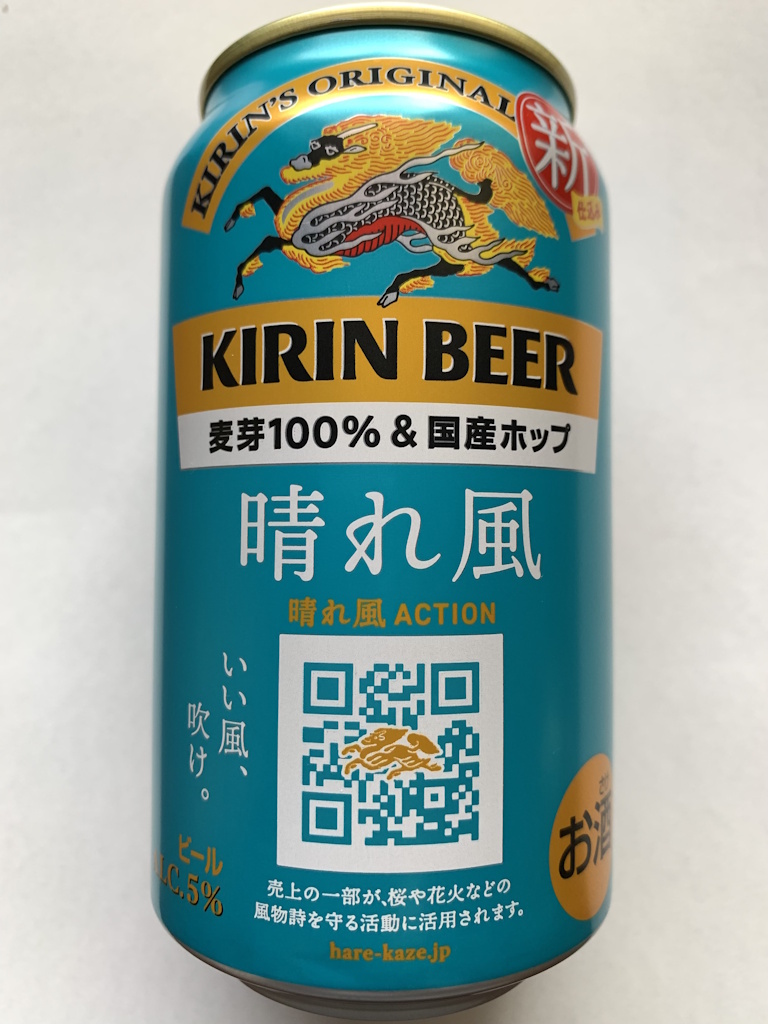
Harekaze

Incidentally, “Harekaze” and “Harekaze ACTION” are registered Japanese trademarks of Kirin Holdings Co., Ltd. While attention tends to focus on the fireworks support initiative itself, from my perspective as someone involved in intellectual property, I cannot overlook the fact that the initiative’s name and brand name are appropriately protected as trademarks.

A beer enjoyed while watching fireworks is truly special. Learning about these initiatives makes that drink feel even more special. I can’t help but hope that this quintessential Japanese summer tradition will continue to be passed down for generations to come.

Speaking of which, while organizing some old photos, I came across a picture of fireworks.
This was taken at “Hanabi Fes.”, held at Laguna Beach in Gamagori Laguna Tenbos, which we visited during our 2018 staff trip.♪ (Cacao)

Fireworks

*“Harekaze” (Japanese Trademark Registration No. 6752854, Japanese Trademark Registration No. 6886937) and “Harekaze ACTION” (Japanese Trademark Registration No. 6841058) are registered trademarks of Kirin Holdings Co., Ltd.
Summer Fun and Intellectual Property

  • August 18, 2026
#design #intellectual property #patent

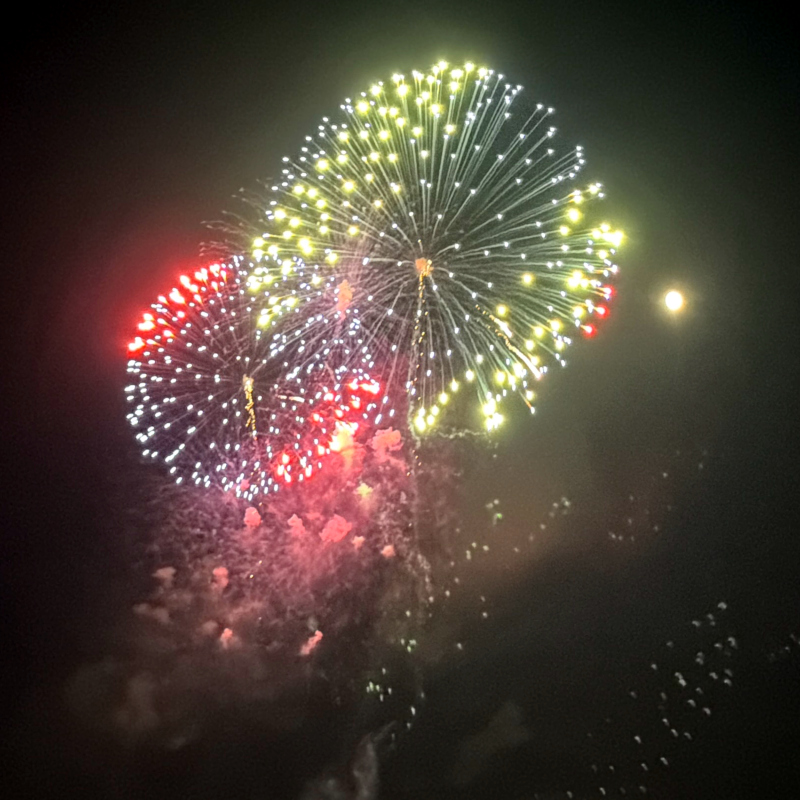
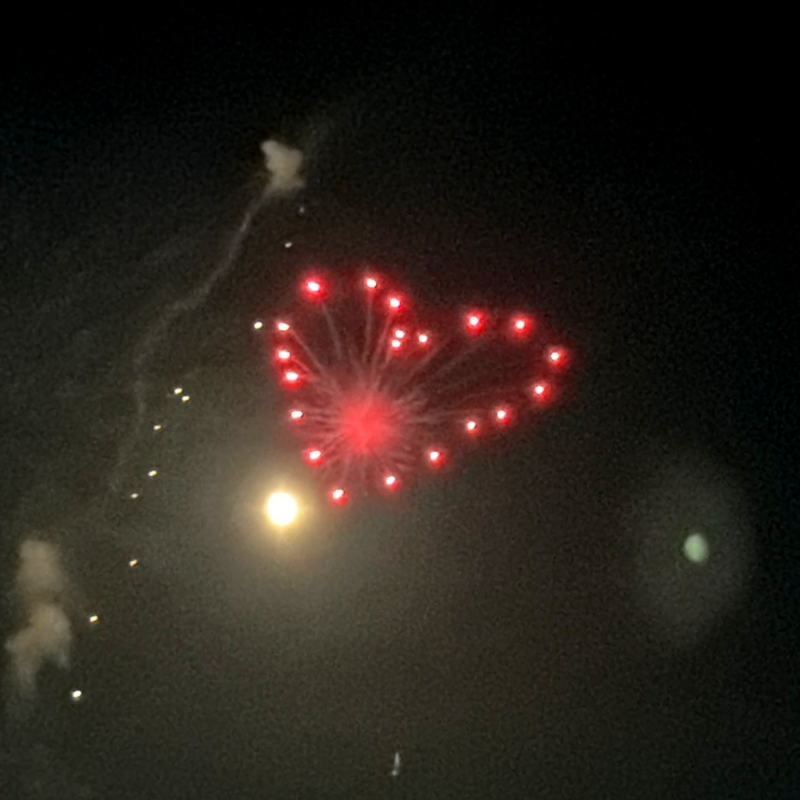
 Every summer, one of my favorite things to do is attend fireworks displays. This year, I visited two fireworks displays and thoroughly enjoyed the spectacular fireworks lighting up the night sky. In addition to the colorful fireworks shown in the photo, creative fireworks shaped like hearts and flowers were also launched, and the crowd was absolutely thrilled.

Fireworks

Fireworks

Fireworks

 As I watched the fireworks, my professional background naturally led me to wonder about their relationship to intellectual property. This reminded me of the debate over whether “fireworks that bloom in the sky” can be registered as designs. This topic was actually included in the year 2010 Patent Attorney Examination (short-answer section), so many of you may already be familiar with it.

 The Design Act is a system that protects the designs of articles, buildings, or images. However, fireworks themselves—which appear in the night sky for only an instant before vanishing—are intangible objects that lack a fixed shape and therefore do not qualify as “articles” protected under the Design Act. Consequently, no matter how beautiful, novel, or original the fireworks may be, the display itself as it spreads across the sky cannot be registered as a design.

 On the other hand, items (products) that have a specific shape—such as fireworks shells (registration example: Launch fireworks flying exodermis) or launchers—may be eligible for design registration. Furthermore, if there are technical innovations in the structure of the fireworks shells or launchers, or in the launch methods, they may also be protected by patents.

 We often look up at fireworks without giving them a second thought, but behind their beauty lies advanced technology and ingenuity. Next year, as I enjoy the fireworks displays, I hope to view them from an intellectual property perspective as well (Hiro).

What Is an “IP Landscape”? From Defensive to Offensive Intellectual Property

  • August 12, 2026
#intellectual property #patent #trademark

Have you heard of the term “IP landscape”? Simply put, it refers to “a method of analyzing intellectual property (IP) information to determine a company’s next strategic move in management and business operations.”
In fact, Japanese companies still boast one of the highest numbers of patent applications in the world. Unfortunately, however, in the “17 government-designated strategic fields” (key areas expected to see high growth in the future), such as AI, semiconductors, and quantum technology, Japan currently lags behind other countries like China and the United States.
That is why “IP Landscape” is now being promoted on a national scale.

Until now, intellectual property activities have primarily focused on “defensive IP” aimed at protecting a company’s own technologies. However, moving forward, it is necessary to shift toward “offensive IP”—analyzing competitors’ moves and market gaps (unoccupied areas) to proactively drive business initiatives.
That said, many may feel that “taking on this challenge alone is too difficult…” In fact, INPIT (Industrial Property Information and Training Institute), a public agency, offers an open-application “IP Landscape Support Program.” This is a reassuring program that allows you to put your plans into practice with the help of experts, so why not start by exploring how to utilize these support measures? (Chamomile)
*“IP Landscape” is a registered trademark.

About the “Practical Guidebook on IP Landscaping to Support Business Strategy” | Japan Patent Office, Ministry of Economy, Trade and Industry (Japanese only)
[INPIT] IP Landscaping Support Program | Independent Administrative Institution, Industrial Property Information and Training Institute (Japanese only)

About Tofu

  • August 5, 2026
#invention

Starting this year, days with temperatures of 40°C or higher have been officially designated as “extreme heat days”. These extreme heat days have been recorded nationwide for several days in a row, and here in Nagoya, we’ve also been experiencing a string of sweltering days.
In summer, when both the temperature and humidity remain high and my appetite inevitably wanes, I eat chilled tofu almost every day.

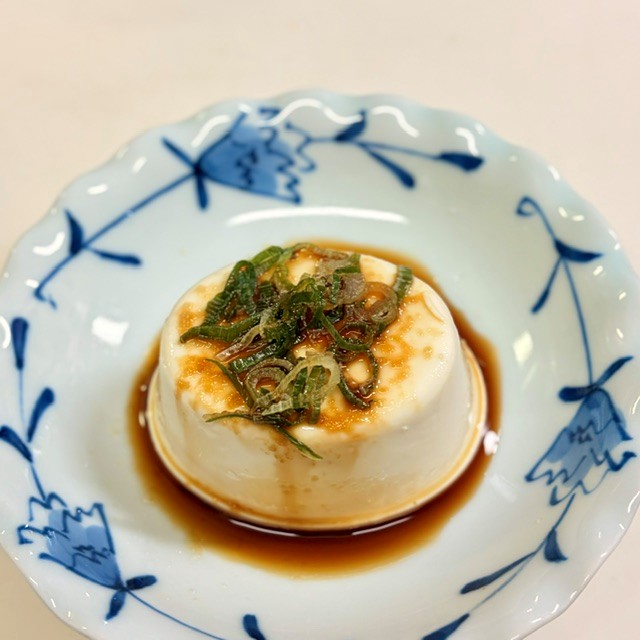
Tofu

It is believed that tofu was introduced from China, though there are various theories regarding the exact period—such as the Nara or Kamakura periods. For a long time afterward, people ate a slightly firmer type of cotton tofu made by boiling soybeans, mixing them with a coagulant, and squeezing out the moisture.
However, it wasn’t until the Genroku era of the Edo period that the tofu restaurant “Negishi Sasano-yuki” finally invented silken tofu—which is delicious served chilled. The restaurant is still in business in Tokyo today, more than 300 years later, and it’s a place I’d love to visit someday.

Silken tofu, with its smooth, slippery texture, is nutritious and delicious year-round—whether served cold or warm—making it an indispensable part of the dining table.
By the way, the chilled tofu we eat almost every day at home is made by simply popping a block of pre-packaged tofu onto a plate, grating some ginger over it, topping it with scallions, and drizzling it with dashi-infused soy sauce. Simple is best.
(Swimmer)

Tofu – Wikipedia
笹乃雪 | 創業三百三十三年 豆富料理 根ぎし (Negishi Sasanoyuki homepage: Japanese only)